Web & API
Node.js / PythonCustomer portals, APIs, and business services.
- Release
- Pending qualification
- Version / digest / support
- Not published
- SBOM / signature / scan evidence
- Not available

FROM IDEA TO TRUSTED OPERATION
What would you like to create? Start with your goal. Plan the technology and costs as you go.
Explore the workspace. Sign in to start your own work.
Explore a question. Work through a decision.
A business question, a technical challenge, or an idea worth exploring.
Session notes only. AI replies are not connected yet. Export before leaving.
MANAGED SOFTWARE FOUNDATION
Starting software for your application, with clear responsibility for updates.
PLANNED CATALOG · Profiles are not published images. Versions, digests, support windows, and evidence require qualification.
Customer portals, APIs, and business services.
Transactional services and enterprise integrations.
Small runtime footprints for compatible applications.
Model serving with workload-specific GPU and driver qualification.
Container-capable gateways with device-specific validation. Not a microcontroller firmware image.
Catalog qualification is intended to cover minimal components, restricted privileges, supported runtimes, scan evidence, SBOMs, provenance, and documented update policies. No image is represented as vulnerability-free or automatically compliant.
Application code, installed dependencies, models, business logic, data, and application configuration. Compatibility changes and application acceptance remain yours unless separately delegated.
Agreed base OS packages, supported language runtimes, base-image releases, and the underlying container platform. Routine supported-component maintenance is included in Platform Operations.
Publishing a new base image does not update running containers. Rebuild and redeploy the application artifact, verify health, and retain a rollback path. Source access, build instructions, tests, and customer acceptance must be agreed.
04 / CONNECT
Keep your cloud account. Agree on what OpenCentric can access and manage.
Start with a plan so account access, costs, and launch requirements are clear. No cloud connection or deployment can be initiated here.
05 / RELEASE
Check the work, approve the launch, and know how to recover.
Start with a plan so account access, costs, and launch requirements are clear. No cloud connection or deployment can be initiated here.
Find a useful capability without starting from scratch. Compare what it does, what it may cost, and how it fits your plan.
Proposed pricing: free listing, with a 5% platform fee deducted from paid purchases and subscription renewals. Hosting and optional lifecycle management are separate.
Planning catalog: 12 proposed offerings · 0 published products and 0 active installations. Quotes and compatibility need review. Export drafts before reloading; purchases and deployments are not connected.
Connect business applications and automate tasks, approvals, and customer workflows.
n8nCustomer cloud or vendor cloud
Trace agent behavior, evaluate responses, and understand model usage, latency, and cost.
LangfuseCustomer cloud or vendor cloud
Create tested, documented transformations that turn warehouse data into trusted business models.
dbt + Supported warehouseCustomer-cloud runner or vendor platform
Establish a governed workspace for data engineering, analytics, and AI workloads.
Databricks + Unity CatalogVendor platform with selected cloud integration
Allocate Kubernetes spending to products, teams, tenants, and environments beyond baseline cost visibility.
KubecostCustomer Kubernetes environment
Investigate workload issues with AI-assisted explanations and controlled operator inspection.
K8sGPT + K9s (optional operator tool)Customer Kubernetes environment
Bring selected business data into tested models and practical dashboards in one coordinated package.
Airbyte + dbt + PostgreSQL + MetabaseCustomer cloud with approved source connectors
Coordinate ingestion, transformation, governance, and analytics around a Databricks-based data estate.
Databricks + dbt + Unity Catalog + Selected ingestion connectorsDatabricks with selected CSP integration
Combine business automation and AI evaluation with human approval at consequential decision points.
n8n + Langfuse + Selected model providerCustomer cloud or approved hybrid configuration
Connect cloud services, existing middleware, and business systems through defined integration routes.
Apache Camel + Selected cloud and API connectorsCustomer cloud or approved hybrid runtime
Connect distributed applications using events, service calls, and durable workflows.
Dapr + Supported message broker + Application templatesCustomer-cloud application runtime
Convert documents into validated data for business reporting and AI-ready information flows.
Unstructured + Selected storage + dbt + Analytics destinationCustomer cloud or approved processing API
Specify the outcome, interfaces, permissions, version, and support policy. Develop independently or use a separately scoped Studio engagement.
Planned publisher verification, artifact scanning, license review, compatibility checks, and listing approval before catalog distribution.
Customers select optional products for their tenant and application. Fit, cost, access, and release gates are reviewed before activation.
Track authorized active installations, version adoption, support, and recurring license revenue when metering and billing are connected.
A catalog listing is not a security certification. Customer permissions, product versions, and release approvals remain explicit.
Businesses, ideas, and the people behind them.
Community preview. Sign in to draft a profile. Public discovery and publishing are not connected yet.
Draft a personal, business, or idea profile. Choose what you would like to share when publishing becomes available.
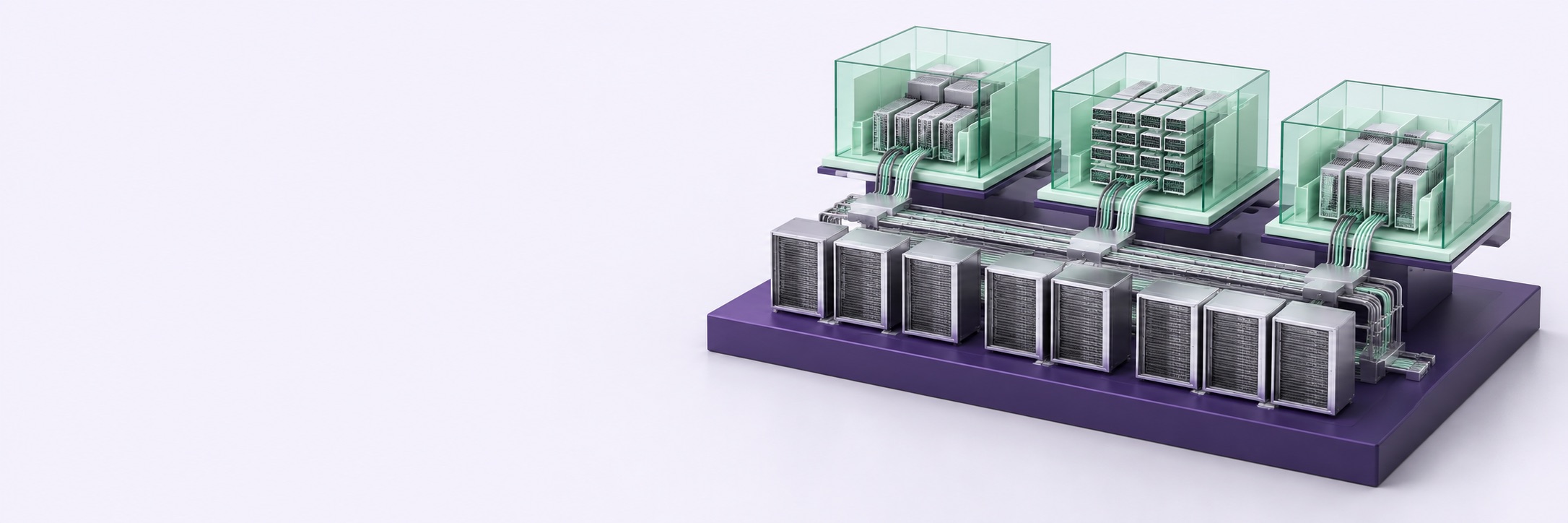
Describe a business outcome, organize your teams, and shape the assets they need. Follow work from a brief through revisions, review, and a controlled handoff, with a managed foundation scoped around your needs.
You should not need to assemble the cloud yourself. Our proposed service model combines cloud setup, supported software, and ongoing care in your own cloud account. Agree on scope, price, and responsibilities before work begins.
Illustrative tenant boundaries. Application code and added dependencies stay with you unless separately scoped. Account and environment isolation are agreed during design.
You own the application, data, and business decisions. You decide who can access them and approve important changes. Application maintenance stays with you unless you ask us to take it on.
The operating model covers infrastructure, runtime, supported base images, delivery controls, and agreed operations. Customer-added code and dependencies remain customer-managed unless separately delegated.
A tenant defines an independently isolated business or customer. Departments such as Marketing, Finance, and Engineering can operate within it, with separately scoped tools, data, budgets, and human owners. Cross-team projects share approved outputs, not unrestricted access.
Describe the people, outcome, information, and decisions behind your idea.
Capture tenant names, applications, environment requirements, and cost assumptions.
Prepare a build packet for architecture, delivery, security, and quality review.
Establish customer-owned billing accounts, environment isolation, and approved delegated access.
Review the proposed change, check it against the live setup, test in development and user acceptance environments, and approve the release.
Track tenant costs, health, change history, patching, evidence, and service ownership.
Available now: free guided planning, tool discovery, cost illustrations, and draft exports. Drafts clear on reload. Live AI, accounts, publishing, payments, cloud connections, and managed operations are not connected. Managed services require an agreed engagement.